PNHRSPNHRSPNHRS

  • 2023 COMMITTEES
  • NUHRA
  • REGIONS
  • OPPORTUNITIES
  • News
  • About PNHRS
    • Organizational Chart
    • PNHRS
    • Objectives
    • Vision I Mission I Core Values
    • Strategy Map
    • History
    • Implementing agencies
    • Downloads
    • Gallery
    • TWC Update
    • About PNHRS Law
Mr. Ricardo J. Apolinario III
Regional Updates
06 February 2013
Hits: 11109

WHO issues new guidance on dietary salt and potassium

  • Print
  • Email

31 JANUARY 2013 | GENEVA - Adults should consume less than 2,000 mg of sodium, or 5 grams of salt, and at least 3,510 mg of potassium per day, according to new guidelines issued by the WHO. A person with either elevated sodium levels and low potassium levels could be at risk of raised blood pressure which increases the risk of heart disease and stroke.

Sodium is found naturally in a variety of foods, including milk and cream (approximately 50 mg of sodium per 100 g) and eggs (approximately 80 mg/100 g). It is also found, in much higher amounts, in processed foods, such as bread (approximately 250 mg/100 g), processed meats like bacon (approximately 1,500 mg/100 g), snack foods such as pretzels, cheese puffs and popcorn (approximately 1,500 mg/100 g), as well as in condiments such as soy sauce (approximately 7,000 mg/100 g), and bouillon or stock cubes (approximately 20,000 mg/100 g).

Potassium-rich foods include: beans and peas (approximately 1,300 mg of potassium per 100 g), nuts (approximately 600 mg/100 g), vegetables such as spinach, cabbage and parsley (approximately 550 mg/100 g) and fruits such as bananas, papayas and dates (approximately 300 mg/100 g). Processing reduces the amount of potassium in many food products.

Currently, most people consume too much sodium and not enough potassium.

“Elevated blood pressure is a major risk for heart disease and stroke – the number one cause of death and disability globally,” says Dr Francesco Branca, Director of WHO’s Department of Nutrition for Health and Development. “These guidelines also make recommendations for children over the age of 2. This is critical because children with elevated blood pressure often become adults with elevated blood pressure.”

The guidelines are an important tool for public health experts and policymakers as they work in their specific country situations to address noncommunicable diseases such as heart disease, stroke, diabetes, cancer and chronic respiratory diseases. Public health measures to reduce sodium and increase potassium consumption and thereby decrease the population’s risk of high blood pressure and heart disease can include food and product labelling, consumer education, updating national dietary guidelines, and negotiating with food manufacturers to reduce the amount of salt in processed foods.

WHO is also updating guidelines on the intake of fats and sugars associated to reduced risk of obesity and noncommunicable diseases.


For more information please contact:

Gregory Härtl

Coordinator, News, Social Media and Monitoring

Telephone: +41 79 203 6715

E-mail: This email address is being protected from spambots. You need JavaScript enabled to view it.


Taken from: http://region9.healthresearch.ph/index.php?option=com_content&view=article&id=53:who-issues-new-guidance-on-dietary-salt-and-potassium&catid=1:latest-news

Date: 05 February 2013 09:18
Dr. Alma S. Banua
Regional Updates
06 February 2013
Hits: 5899

BCHRD Undertakes Health Research Proposal Packaging Process (HRPPP)

  • Print
  • Email

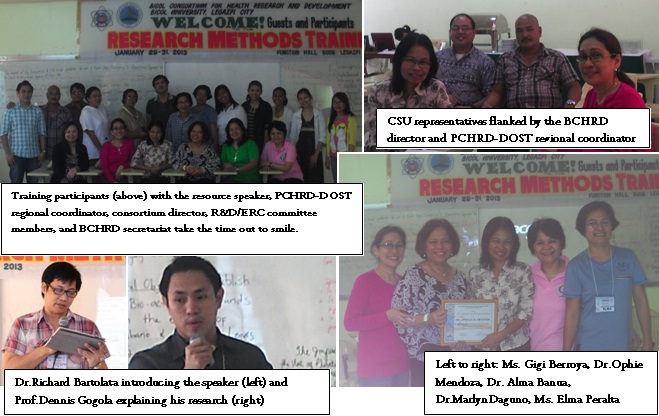
The aim of the Philippine National Research Health System of ensuring that the health research is linked to the needs of our health system is cascaded to the vision of the BCHRD, of producing excellent health researches that are responsive to the needs of Bicolanos. In order to achieve the vision, this 2013, the BCHRD is working on packaging health and health related research proposals. This was expressed during the welcome address of Dr. Alma Banua, the consortium director, wherein she enjoined the participants to undertake the Health Research Proposal Packaging Process (HRPPP) with the consortium.

The HRPPP was conceptualized based on the principle of learning by doing by Aristotle. It is comprised of lectures by a resource speaker and workshop/application of the learning, thus the invited participants come with a research proposal that is refined as they undergo the HRPPP. The review of the research proposal is done by the Research and Development and Ethics Review Committees together with an expert recommended by the PCHRD-DOST.

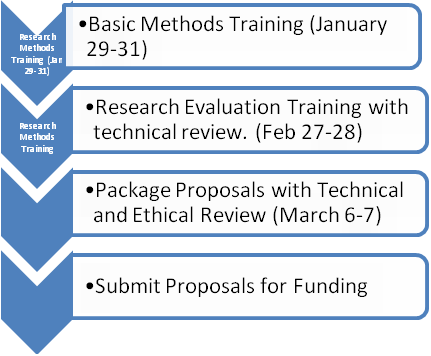
The HRPPP is comprised of 3 phases, Phase 1:Basic Methods Training held on January 29-31, consisting of concepts on objective setting, research design and data analysis; Phase 2:Research Evaluation Training with technical review (Feb 27-28); and Phase 3:Package Proposals with Technical and Ethical Review (March 6-7). At the end of the process is a full blown proposal ready for submission to the funding agency.

Fifteen (15) research proposals were presented by the research participants from the member agencies. It was short listed to six (6) – all of which were aligned to the National Unified Health Research Agenda (NUHRA) and/or Regional Unified Health Research Agenda (RUHRA).

These six proposals are:

  1. Joel Olfindo et al- Biomedical Waste Management Practices in Government Health Care Facilities in Catanduanes
  2. Elma P. Peralta & Marlyn A. Daguno- Total Financial Cost of Motor Vehicular Accident Patients Admitted at BRTTH
  3. Dennis B. Gogola & Carina Orden- Wound Healing Properties of Guyabano Leaf and Malunggay Leaf Extract
  4. Jocelyn E. Serrano- Biological Activities of Pili Pulp Extracts
  5. Joan Nace- Phytochemical Characterization, Antimicrobial Screening, and Histological Study of Orthosiphon aristatus (Balbas Pusa)
  6. Michael Angelo B. Brogada- Feasibility of a Web-Based Health Status Monitoring and Decision Support System for Public Elementary Pupils of the Province of Albay

Taken from: http://region5.healthresearch.ph/index.php?option=com_content&view=article&id=24:bchrd-undertakes-health-research-proposal-packaging-process-hrppp&catid=1:latest-news&Itemid=6

Date: 05 February 2013 11:50

YHL
Regional Updates
25 January 2013
Hits: 5399

CVCHRD Logo Design Contest

  • Print
  • Email


Taken from http://region7.healthresearch.ph/index.php?option=com_content&view=article&id=34:cvchrd-logo-design-contest&catid=1:latest-news&Itemid=6

Dated Friday, 18 January 2013 15:11

RHRDC XI Site Administrator
Regional Updates
31 January 2013
Hits: 6429

CARAGA HRDC calls for the 2013 Best Mentor in Health Research Award

  • Print
  • Email

The Department of Science and Technology - Philippine Council for Health Research and Development (DOST-PCHRD) in collaboration with the Department of Health (DOH) is pleased to announce the search for the Best Mentor in Health Research Award for the year 2013.

The award aims to recognize excellence in mentorship that instills passion among researchers resulting to enhanced relevance and productivity in health research. It also aims to reward mentors who have built the capacities of researchers in the health sector which led  to significant advances in the Philippine National Health Research System (PNHRS) thrusts as identified in the National Unified Health Research Agenda (NUHRA).

Read more: CARAGA HRDC calls for the 2013 Best Mentor in Health Research Award
ARMM Secretariat
Regional Updates
25 January 2013
Hits: 5895

AHRC planning workshop sets new wheels in motion for health R&D in the ARMM

  • Print
  • Email

The Philippine Council for Health Research and Development (DOST-PCHRD), in coordination with the Department of Science and Technology – ARMM (DOST-ARMM), facilitated the 3-day ARMM Health Research Consortium Re-Orientation Meeting and Strategic Planning Workshop on December 17-19, 2012 at the El Manuel Convention Center, Cotabato City. The event, which aims to update and revitalize the consortium for it to address the current health situation and be more responsive to the health R&D needs in the region, was attended by stakeholders from the academe, health institutions, and the line agencies as well as the Office of the Regional Governor.

Read more: AHRC planning workshop sets new wheels in motion for health R&D in the ARMM
  1. Health Research Proposal Writeshop slated
  2. MMHRDC research forum addresses research gaps in cancer
  3. SMU Bagged 1st Place in Poster Research Exhibit
  4. DOST & CVHRDC Conduct 1st Biennial Health Symposium

Page 43 of 59

  • Start
  • «
  • 38
  • 39
  • 40
  • 41
  • 42
  • 43
  • 44
  • 45
  • 46
  • 47
  • »
  • End

fb tw


feedback
PLEASE RATE YOUR EXPERIENCE IN USING THIS WEBSITE

Your rating

no rate selected


email is required

email is invalid

affiliation is required

affiliation is required

PCHRD LOGO small
Republic of the Philippines
Department of Science and Technology
Philippine Council for Health Research and Development
 
2/f Titanium Building, DOST MIRDC Compound
Gen. Santos Ave., Bicutan, Taguig City, 1631, Philippines
  • NUHRA
  • REGIONS
  • OPPORTUNITIES
  • News
  • About PNHRS
    • Organizational Chart
    • PNHRS
    • Objectives
    • Vision I Mission I Core Values
    • Strategy Map
    • History
    • Implementing agencies
    • Downloads
    • Gallery
    • TWC Update
    • About PNHRS Law