PNHRSPNHRSPNHRS

  • 2023 COMMITTEES
  • NUHRA
  • REGIONS
  • OPPORTUNITIES
  • News
  • About PNHRS
    • Organizational Chart
    • PNHRS
    • Objectives
    • Vision I Mission I Core Values
    • Strategy Map
    • History
    • Implementing agencies
    • Downloads
    • Gallery
    • TWC Update
    • About PNHRS Law
Activities
22 August 2016
Hits: 4386

Corporate Social Responsibility expert shares ways to engage stakeholders in health research

  • Print
  • Email

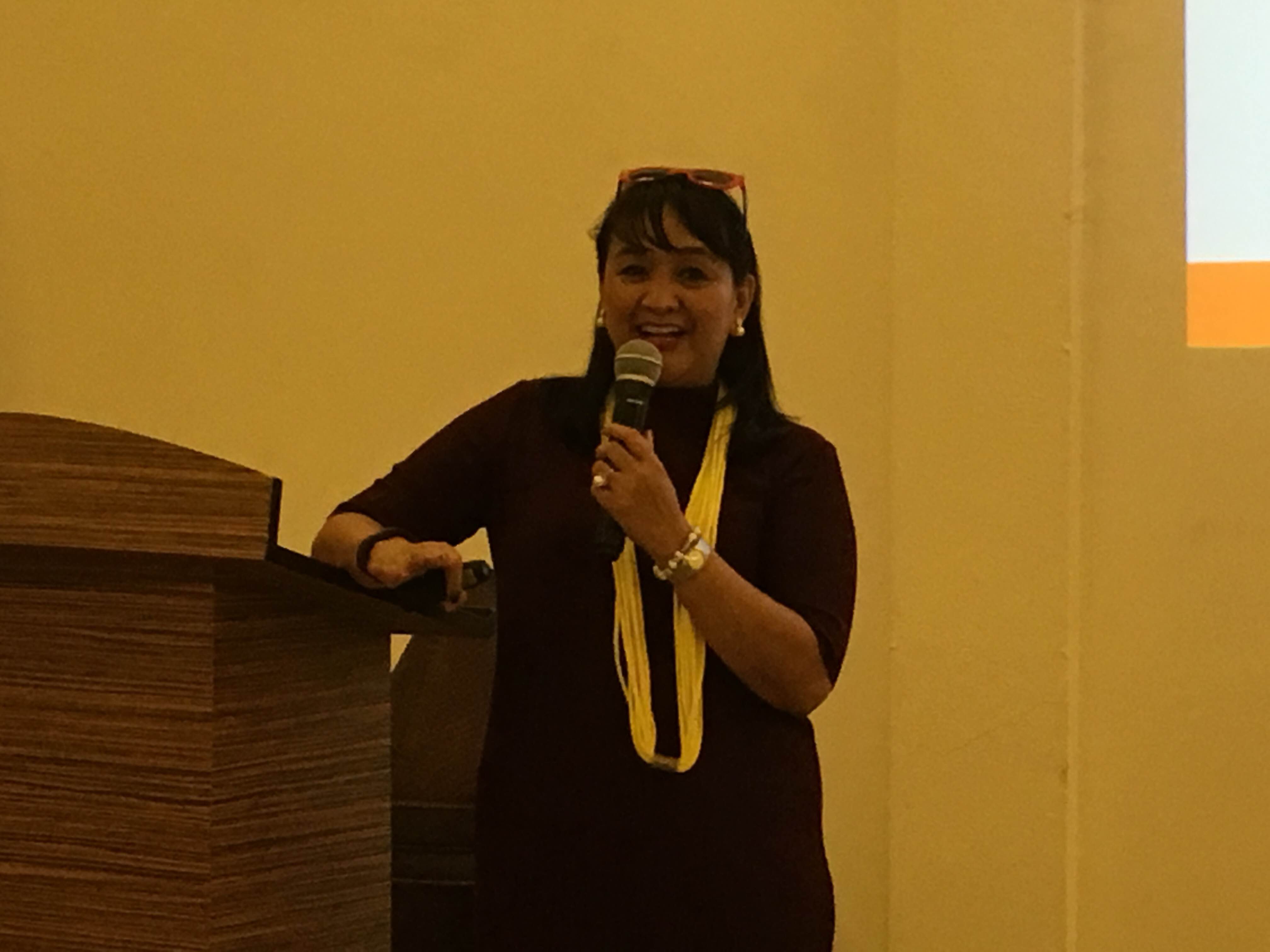
PUERTO PRINCESA, PALAWAN- When asked how Unilab Foundation engages their stakeholders to support their advocacies, Ms. Rhodora Palomar-Fresnedi, Unilab Foundation Executive Director, emphasized the importance of “craft, curate, and communicate” during her presentation for the Health Research Communicators Meeting on 9 August 2016 at Citystate Asturias Hotel.  

According to Fresnedi, knowing what story you want to tell is crucial in engaging stakeholders. In crafting a story, one should consider the possible reasons why people would want to hear a story. Likewise, one should be certain of the change that he/she wants his/her audience to make.

“You can’t build a community if no one can associate with your conflict,” Fresnedi emphasized. To connect with their audience, Fresnedi cited that all programs of Unilab Foundation are research-based. 

To curate a story, Fresnedi advised to create a communication experience that will enable the people to become story tellers of their own.

“Kapag maganda ang istorya, if you build the experience, hindi niyo na kailangang mangimbita [ng mga tao], sila ang pupunta sayo,” she explained. The message becomes positive when people write from the heart, she added.

Another aspect to consider is communicating the message. In every research, the researcher should identify his/her target audience, ways to reach them, and means to measure his/her success on engaging them. The researcher should have robust communication, foundation, and structure, Fresnedi explained.

“Tell a story so compelling, others would want to write about it,” she ended.

The Health Research Communicators meeting is one of the pre-events of the 10th Philippine National Health Research System (PNHRS) week celebration. With the theme “Research and Innovation for Health and the Environment,” the 10th PNHRS Week provided a platform for interaction, learning, and collaboration of different stakeholders in health research and development. ■

Business Mirror
Shared Stories
05 March 2018
Hits: 6857

WHO scientist to speak at PCHRD 36th yr celebration

  • Print
  • Email

Dr. Bernadette Ramirez, World Health Organization’s (WHO) scientist, will deliver the keynote address at the Philippine Council for Health Research and Development’s (PCHRD) 36th anniversary celebration on March 16 at the Philippine International Convention Center.

Ramirez joined the WHO-Special Programme for Research and Training in Tropical Diseases in June 2007 with over 20 years academic and research experience in health-product innovation, drug discovery, vaccines and the development of diagnostics for infectious tropical diseases.

She provides support and coordinates projects that studies population health vulnerabilities, vector-borne diseases and ways to increase population resilience against the climate-change impact in Africa.

Joining Ramirez as guest speakers are Science Secretary Fortunato T. de la Peña, Health Secretary Francisco T. Duque  III and University of the Philippine (UP) Manila Professor Mary Ann Lansang. The PCHRD 36th anniversary celebration will highlight social innovations in health.

Part of the program is the recognition of good practices in social innovation in health, including the winners of the 2017 Search for PHL Social Innovation in Health Initiative Solutions.

A panel discussion follows, which will discuss opportunities and appropriate frameworks on social innovation in health research.

The panelists include UP Manila Professor Noel Juban, UP School of Economics Professor Aleli Kraft, Ateneo de Manila University Institute of Philippine Culture Research Associate Dennis Batangan and One Health Boat Project Founder Katerina Nono-Abiertas.

Awarding of newly accredited Research Ethics Committees and winners of the “Visualize Health Research: Visual Abstract Contest” will also be conducted.

PCHRD is the national coordinating and monitoring body for health research.

Source: https://businessmirror.com.ph/who-scientist-to-speak-at-pchrd-36th-yr-celebration/

Shared Stories
18 January 2018
Hits: 7294

DLSU student develops robotic arm for stroke rehab

  • Print
  • Email

An engineering student from De La Salle University (DLSU) has developed a wearable robotic arm that can be used in the therapy of stroke and accident victims. 

Paul Dominique Baniqued told ANC's Future Perfect Tech Shorts that he saw the need for a bio-robotic device while visiting hospitals during his stint selling lab equipment. 

He saw long lines of patients waiting for therapists and thought that he could come up with a way to help these patients.

Baniqued said he was also inspired by science fiction movies like Iron Man and Elysium which featured high-tech exoskeletons. 

"For my research, I would like something that helps people and at the same time at least be cool to show," Baniqued said. 

He is one of 25 Filipinos who received grants from the British Council's Newton Agham Programme, which aims to develop science and innovation in the Philippines.

Baniqued will pursue advanced studies in the United Kingdom where he hopes to further develop his expertise in bio-robotics.


Source: http://news.abs-cbn.com/video/business/01/18/18/dlsu-student-develops-robotic-arm-for-stroke-rehab

Shared Stories
29 January 2018
Hits: 9686

Agapay project develops robotic arm prototype for stroke patient rehab

  • Print
  • Email

The Agapay Project has developed a robotic device to provide accessible healthcare options to all Filipinos.

The initiative by De La Salle University to design and develop cost-effective robotic exoskeletons for stroke and injury rehabilitation has completed their robotic arm rehabilitation device prototype.

Funded by the Department of Science and Technology – Philippine Council for Health Research and Development (DOST-PCHRD), the research team, composed of biomedical engineers from De La Salle University and rehabilitation experts from University of the Philippines – Philippine General Hospital, created two robotic exoskeleton prototypes with a biofeedback mechanism for rehabilitation of post-stroke and injured patients by assisting motor movements in the shoulder, arm, and hand.

The biomedical devices, which were 3D-printed, offers a cost effective solution to production and works by utilizing a real-time biofeedback system which records neuromuscular activity using surface electromyography (sEMG).

The DOST-PCHRD reported how the AGAPAY team demonstrated in a research symposium in De La Salle University Manila, how the upper limb prototype mimicked the 7 degrees of mobility found in the shoulders, elbows, and wrists of patients, showing its potential use for physical therapy and rehabilitation.

Source: https://www.goodnewspilipinas.com/agapay-project-develops-robotic-arm-prototype-for-stroke-patient-rehab/

Shared Stories
08 January 2018
Hits: 45124

PHL Science dept bares 5 major achievements in 2017

  • Print
  • Email

Research and technology assistance are the major highlights of the Department of Science and Technology (DOST) for 2017.  Science Secretary Fortunato T. de la Peña told the Philippine News Agency (PNA) what he considers the five major accomplishments of the DOST in 2017.

R&D assistance

De la Peña said the DOST assisted more than 1,000 Research and Development (R&D) projects all over the country, with 65 percent already completed.

The 1,057 R&D projects are being managed by DOST-attached agencies and councils, such as the Philippine Council for Industry, Energy and Emerging Technology Research and Development and the Philippine Council for Health Research and Development.

In terms of technology transfer, the DOST-Technology Application and Promotion Institute guides investors regarding the intellectual-property system. The agency also provides them with patent consultations, as well as grants for the payment of Intellectual Property Office fees.

According to  de la Peña, 165 patents have been filed at the Intellectual Property Office this year.

Three Technology Transfer Days were also organized in 2017, and 30 technology fairs were conducted.

Technology Transfer Day aims to ensure technologies or inventions are maximized for the benefit of society and industries. Locally developed technologies supported by the DOST are showcased during this activity.

The agency also provides precommercialization support. A total of 17 inventions it has promoted were already commercialized this year.

Assistance to MSMEs

For this year alone, 574 firms were provided with hardware and software to upgrade their technology capacity, according to de la Pena. These micro, small and medium enterprises (MSMEs) have received the Small Enterprises Technology Upgrading Program (Setup) innovation fund.

Setup is a DOST program that aims to encourage MSMEs to adopt technological innovations to improve their products and services. The program aims to help MSMEs improve their competitiveness by providing them with a loan that is payable in three years.

Assistance to start-ups

The DOST has assisted almost 400 start-ups in 2017.

“We have provided them with all types of assistance—money, services, calibration, etc.,” de la Peña said.

To further help the start-ups and MSMEs, the DOST offers the OneStore, a web site where their products are displayed and can be purchased.

Close to 11,000 products have been uploaded in the OneStore web site this year.

Human-resource development

De la Peña noted that, in 2017, the DOST has provided scholarships to more than 22,000 students.

Of the said figure, 7,881 are scholars of the Philippine Science High School. Close to 1,000 are taking their PhDs, while 2,700 are taking Master of Science. The rest of the scholars are taking undergraduate courses.

Additional radars

To further improve weather-forecasting capability and disaster-risk reduction in the country, four Doppler radars, which could measure the rain volume, and two flood-forecasting and -warning centers have been completed this year.

The DOST said that, to date, the country has 13 Doppler radars and three X-Band radars in the country. “These radars have contributed to low forecast track error,” the science agency said.

The Doppler radars are in Iloilo, Palawan, Guian, Subic, Tagaytay, Mactan, Hinatuan, Tampakan, Basco, Zamboanga, Aparri, Virac and Baguio.

The three X-Band radars, on the other hand, were placed in the Philippine Atmospheric, Geophysical and Astronomical Services Administration central office in Quezon City, Mindanao, and Baler in Aurora province.

  1. Pinoys with COPD urged to join landmark study on the disease
  2. Unilab’s Sekaya inaugurates Laguna plant for natural medicinal products
  3. Sira-sira Store: ‘Bisag saging’ life is tolerable
  4. Research-to-policy gap still a challenge in PH

Page 54 of 59

  • Start
  • «
  • 49
  • 50
  • 51
  • 52
  • 53
  • 54
  • 55
  • 56
  • 57
  • 58
  • »
  • End

fb tw


feedback
PLEASE RATE YOUR EXPERIENCE IN USING THIS WEBSITE

Your rating

no rate selected


email is required

email is invalid

affiliation is required

affiliation is required

PCHRD LOGO small
Republic of the Philippines
Department of Science and Technology
Philippine Council for Health Research and Development
 
2/f Titanium Building, DOST MIRDC Compound
Gen. Santos Ave., Bicutan, Taguig City, 1631, Philippines
  • NUHRA
  • REGIONS
  • OPPORTUNITIES
  • News
  • About PNHRS
    • Organizational Chart
    • PNHRS
    • Objectives
    • Vision I Mission I Core Values
    • Strategy Map
    • History
    • Implementing agencies
    • Downloads
    • Gallery
    • TWC Update
    • About PNHRS Law