PNHRSPNHRSPNHRS

  • 2023 COMMITTEES
  • NUHRA
  • REGIONS
  • OPPORTUNITIES
  • News
  • About PNHRS
    • Organizational Chart
    • PNHRS
    • Objectives
    • Vision I Mission I Core Values
    • Strategy Map
    • History
    • Implementing agencies
    • Downloads
    • Gallery
    • TWC Update
    • About PNHRS Law
Latest News
07 November 2016
Hits: 4444

1st PH Herbal Medicine Summit pushes for more affordable, accessible herbal meds
  • Print
  • Email
MALATE, Manila – The 1st Philippine Herbal Medicine Summit brought together herbal medicine researchers and consumers alike last 25-27 October 2016 at the Century Park Hotel, Malate, Manila.


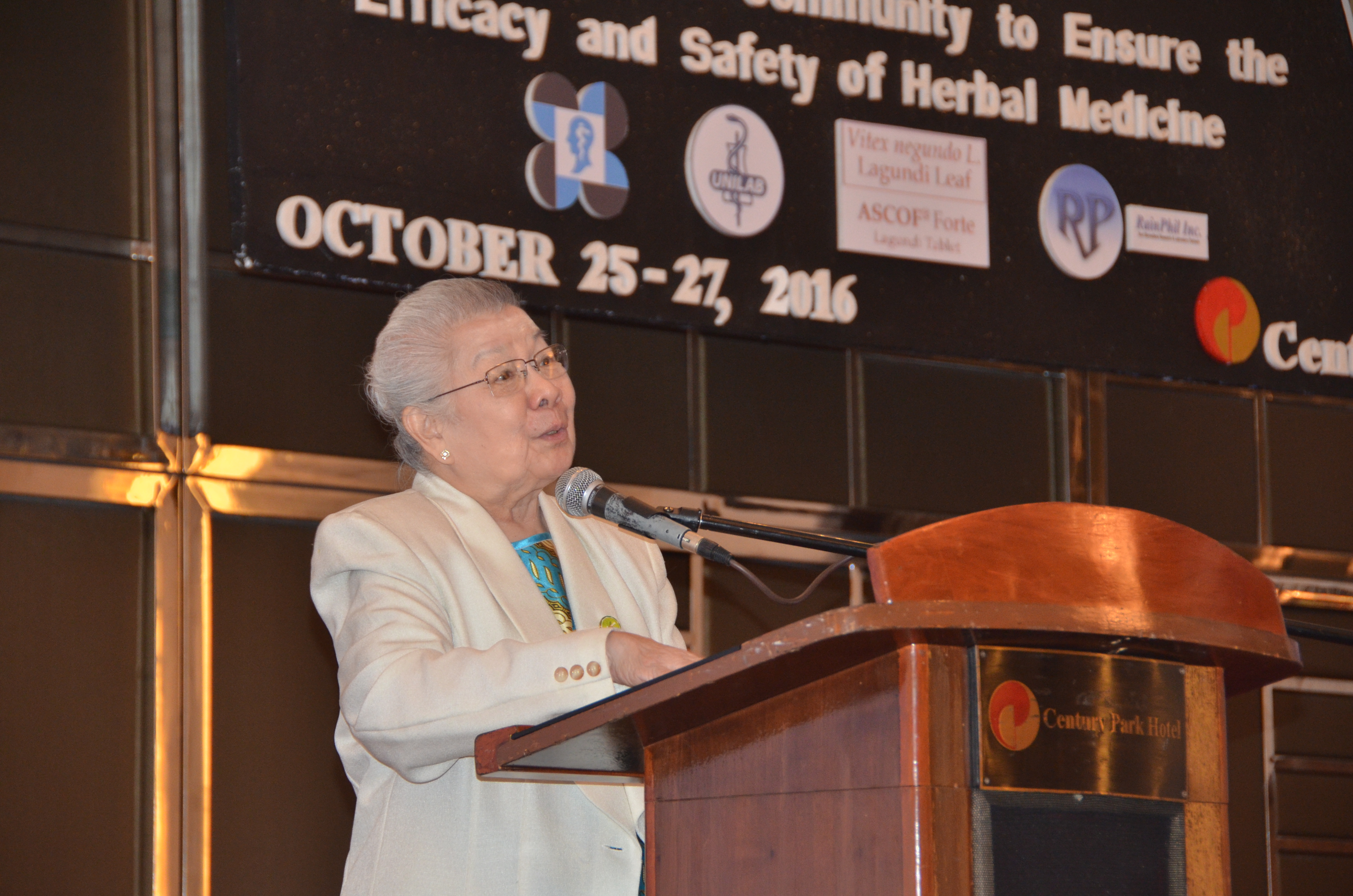
Dr. Nelia Cortes-Maramba delivers the Dr. Conrado Dayrit Memorial Lecture during Day 1 of the 1st Philippine Herbal Medicine Summit last 25 October 2016 at the Century Park Hotel, Malate, Manila.

Led by the Institute of Herbal Medicine – University of the Philippines Manila, the first herbal medicine summit in the country had discussions on how different stakeholders in the field can work together to ensure the efficacy and safety of herbal medicines.

The Department of Science and Technology (DOST) Secretary Fortunato T. Dela Peña sent his message of support through his keynote address delivered by Ms. Merlita Opeña, Chief, Research Information Communication and Utilization Division of the Philippine Council for Health Research and Development. “Today is the best day to start working together and become a community. Let’s reform and reshape the landscape of herbal medicines’ research in the country so that we can address the challenges of the coming generation in terms of provision of quality but affordable medicines using our own resources, “ said Sec. Dela Peña in his message.

Dr. Nelia C. Maramba delivered the Dr. Conrado Dayrit Memorial Lecture and talked about the trials and triumphs of the National Intergrated Research Program on Medicinal Plants (NIRPROMP) when it started in 1974. In her talk, Dr. Maramba said that there is lack of acceptance in terms of herbal medicine research results. During the early years, the NIRPROMP team saw that validating folkloric claims of plants used as home remedies was a better approach in doing herbal medicine research, she said.

The Dr. Natividad De Castro Memorial Lecture was delivered by Dr. William D. Torres, with his talk on assuring quality, safety, and efficacy of herbal medicines through principles used in biopharmaceutics. Meanwhile, Dr. Irene Villaseñor, Chemistry Professor from the University of the Philippines – Diliman presented the different bioactive compounds of several Philippine plants which may be developed into new drugs with further research. Her lecture is in honor of National Scientist Dr. Clara Lim-Sylianco.

Dr. Juntra Laothavorn, visiting Professor from the Institute of Tropical Medicine - Nagasaki University and Former World Health Organization – Research and Training in Tropical Diseases (WHO-TDR) Clinical Coordinator, also reiterated in her lecture that there is a global need of gearing research efforts toward regulation and validation of herbal medicines, especially that some have reportedly caused adverse results when taken excessively. Dr. Laothavorn also shared how herbal medicine research thrived in Thailand. In 1960, Thailand halted herbal medicine research as there was no significant development/knowledge derived from the field. It was only in 1977 when the research field was revived. Since then, herbal medicine data management systems were reformed and were based on Thai Traditional wisdom and existing Thai herbs. Dr. Laothavorn also presented ethical considerations in doing clinical trials in herbal medicine research during her third plenary lecture.

Lectures on herbal medicine production, quality assurance, research methods, and data management were also tackled during the three-day summit. Ms. Merlita Opeña also presented the status of the APEC Regional Database for Herbal Medicine. The database will improve access to herbal medicine research, prevent piracy, and preserve traditional medicine knowledge in the Asia-Pacific region. Stakeholders were also encouraged to participate and contribute in the proposal for a National Herbal Medicine Research Policy presented by Dr. Adovich Rivera.

Summit participants signified their support to the annual conduct of the summit to foster research collaboration enabling the creation of safe, affordable, and accessible herbal medicines for the Filipinos.
Ana Ciaren H. Itulid
Latest News
02 November 2016
Hits: 2734

Call for Nominations: Alberto G. Romualdez, Jr. Outstanding Health Research Award (AROHRA)

  • Print
  • Email

GUIDELINES

PURPOSE

The Alberto G. Romualdez, Jr. Outstanding Health Research Award (AROHRA) encourages researchers to be sensitive to the scientific and technological requirements of the health delivery system and rewards those whose research have contributed significantly to addressing prevalent health issues.

The Award gives recognition to a research program or project that has demonstrated the link between research and practice through the utilization of research findings in the health delivery system. Given by the Department of Science and Technology- Philippine Council for Health Research and Development (DOST-PCHRD) in collaboration with the Department of Health (DOH), the award has two (2) categories: Biomedical Research and Health Services Research.


NOMINATION PROCEDURES

1. What can be nominated

Any health research program or project may be considered for the Award. Work to be nominated may fall under any of two categories: Biomedical Research or Health Services Research.

For Biomedical Research, the program or project must be engaged in generating and/or adapting appropriate health technologies that address specific health problems and emphasize the development of diagnostic tools and techniques, biological (e.g. drugs, vaccines, functional foods, etc.), biomedical devices, and ICT-based healthcare technologies.

For Health Services Research, the program or project must be involved in the organization, administration, operation, utilization and other aspects of health services delivery systems that address the country’s social, political, cultural, and economic conditions.

2. Who can nominate

Any institution; members of the consortium; scientific, technological and professional societies or associations; research institutes; universities and colleges; and individuals may nominate. Self-nomination is not allowed.

3. Who can be nominated and what can be a nominated entry

The award is open to a completed research program or project done by Filipino researcher/s. The nominated entry must be done mainly in the Philippines.

For purposes of this Award, a research program refers to a group of interrelated or complementing research projects that require an interdisciplinary or multidisciplinary approach to meet established goal/s within a specific time frame, while a research project refers to the basic unit in the investigation of specific research problems with predetermined objective/s to be accomplished within a specific time frame.

4. How to nominate

Nominations should be made using the prescribed nomination form. Entries from both consortium member institutions and non-consortium member institutions must be submitted to and endorsed by the Chair of the consortium. Each nomination should include ALL of the following:

a. Write-up on the impact of the project on health delivery,a contextualization of the problem that the project/program seeks to address and a description of the program/project, highlighting how the results were utilized, as well as the benefits derived from their utilization.
b. One copy of each of the technical reports and/or publicationsof the completed projects leading to technology transfer and/or translation to a policy formulation or program intervention.
c. Statement from the technology user(s) and program or project end-userdescribing the contribution of the technology and project or program in improving health delivery.

• After the preliminary screening, the judges may ask for additional supporting documents from the nominees.

5. Schedule of Selection and Awarding

The Award is given every three (3) years.

6. Where to send nominations

a. Nominations should be submitted to the regional consortium secretariat not later the deadline. (Please refer to the attached paper for list of addresses)

b. Endorsed entries by the consortium chair should be submitted to DOST-PCHRD.

INCENTIVES

The Award consists of a cash prize of P 500,000 and a trophy for winners of each category.


DEADLINE OF SUBMISSION
Consortium: February 24, 2017
DOST-PCHRD: March 3, 2017


To download the complete guidelines and the Nomination Form, click HERE.

Latest News
21 October 2016
Hits: 3280

e-Asia Project Implementation workshop tackles influenza and TB in Asia

  • Print
  • Email

The Department of Science and Technology (DOST) through the Philippine Council for Health Research and Development (PCHRD) hosted the e-Asia Project Implementation Workshop on Pulmonary Diseases induced/associated with Influenza and Tuberculosis in Asia last 17-18 October 2016.

The two-day workshop commenced with project visits organized by the Philippine Influenza and Tuberculosis teams led by Dr. Marilla Lucero of the Research Institute for Tropical Medicine (RITM) and Dr. Jaime C. Montoya of PCHRD, respectively. Project teams from Japan and Viet Nam were able to observe the project developments of studies conducted at RITM and at the Tuberculosis - Directly Observed Treatment Shortcourse (TB-DOTS) Center in San Juan, Batangas through the research collaboration.

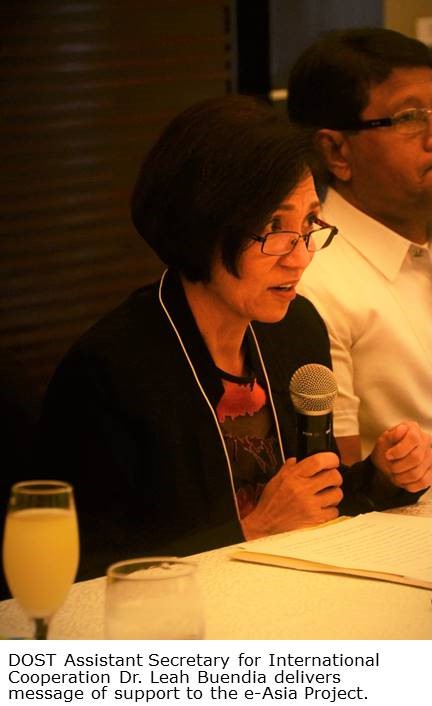
Member-countries presented their respective project progress reports and research outcomes during the second-day of the workshop. On behalf of Dr. Rowena Cristina L. Guevara, DOST Undersecretary for Research and Development, DOST Assistant Secretary for International Cooperation, Dr. Leah Buendia delivered a message of support to the goal of the project – improving health outcomes in East Asia, particularly on influenza- and TB-induced diseases mitigation. “With the e-Asia project, we are closer to the time when tuberculosis and influenza will no longer be a public threat… I am very positive that all our research efforts will lead to a better health status for the East Asian region, particularly in alleviating influenza and tuberculosis prevalence,” she quoted.

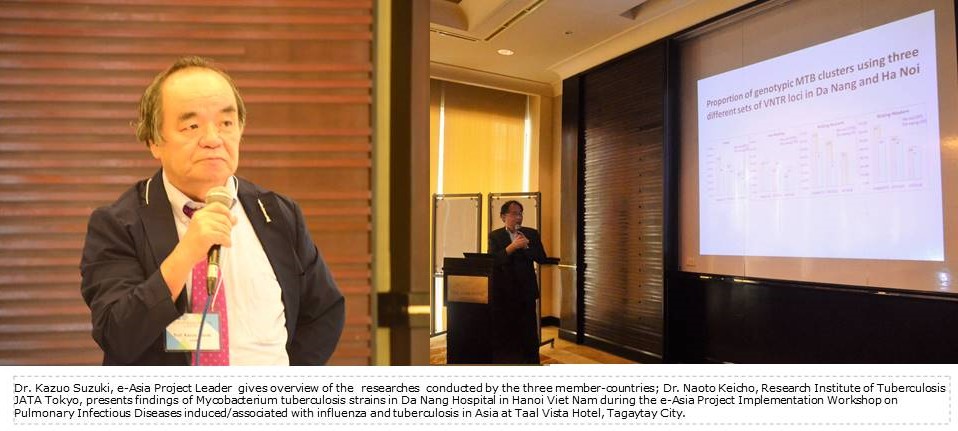
e-Asia Project Leader Dr. Kazuo Suzuki of Teikyo University presented the research activities conducted by the teams since the project launched. Through the e-Asia project, member-countries were able to assess the rate of influenza and tuberculosis prevalence in their country. Detection of different strains of the viruses was also improved.

Japan tuberculosis team member, Dr. Naoto Keicho of the Research Institute of Tuberculosis JATA Tokyo, introduced some latest advancements in TB research – advanced spoligotyping softwares and next generation sequencer. Viet Nam influenza team leader, Dr. Phung Thi Bich Thuy, also shared how the e-Asia project promoted capacity building for the Viet Nam Children's Hospital staff in the detection and culture of the influenza virus. 

 As of September 2016, the Philippine influenza team reported that more consultations/admissions were reported in public health centers (66%) than in hospitals i.e. UP-Philippine General Hospital (26%) and Research Institute for Tropical Medicine (8%). Meanwhile, Dr. Anna Maria Lena Lopez of the University of the Philippines reported the findings of the Philippine tuberculosis team and reported a low prevalence of TB in children in San Juan, Batangas. The annualized TB notification rate for the disease has also gone up from 170 to 210 per 100,000 population. The surveillance study also led to the commencement of a TB study on children from San Juan, Batangas to Los Banos, Laguna

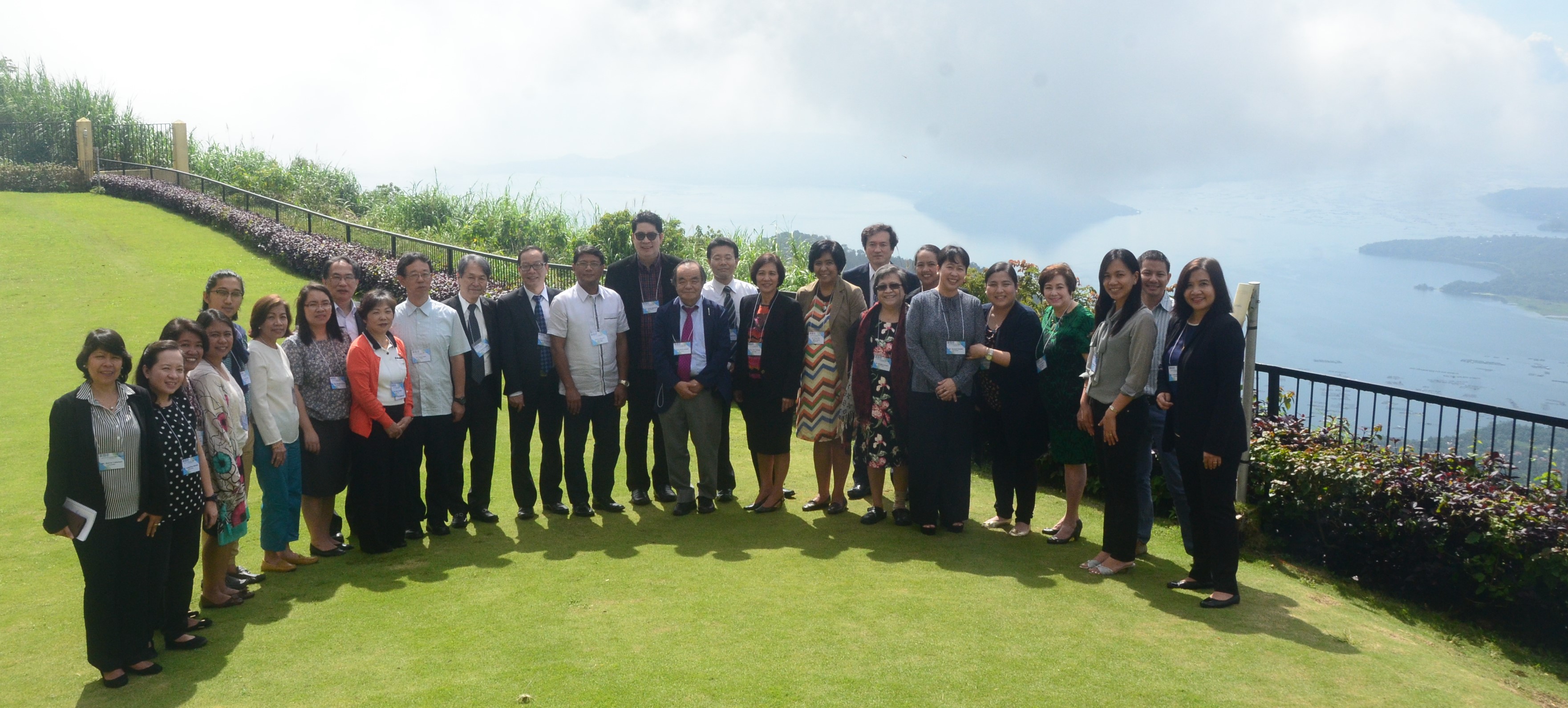
The delegates of the e-Asia Project Implementation Workshop on Pulmonary Infectious diseases induced/associated with influenza and TB

The e-Asia project on pulmonary infectious diseases is set to end this 2016. Future plans of the project teams include request to continue researches on influenza and TB mitigation as well as the addition of new diseases that needs to be addressed in the East Asian region e.g. non-communicable diseases, cancer, and lifestyle diseases.

Ana Ciaren H. Itulid
Latest News
02 November 2016
Hits: 2671

Call for Nominations: Best Mentor in Health Research Award

  • Print
  • Email

GUIDELINES

Purpose

The Department of Science and Technology-Philippine Council for Health Research and Development (DOST-PCHRD) recognizes the vital role of the research mentor who selflessly shares knowledge and skills, instills values and attitudes, and inspires those involved in the research process, thereby creating an enabling environment and contributing to capacity-building in research.

The Best Mentor Award is offered biennially to recognize and reward mentors in health research who have built the capacities of researchers in the health sector and, in the process, propelled significant advances in the Philippine National Health Research System’s (PNHRS) thrusts as identified in the National Unified Health Research Agenda (NUHRA).

Objective

The Best Mentor Award recognizes excellence in mentorship that instills passion among researchers, redounding to enhanced relevance and productivity in health research.

Eligibility

A. Who can nominate

The nominating party may be any of the following:

•head of the nominee’s institution or immediate supervisor
•colleague/s
•trainee/s
•student/advisee

Self-nomination is not allowed.

B. Who can be nominated

1. must be a Filipino citizen
2. at least a holder of master’s degree degree
3. actively involved in mentoring researchers/students or colleagues for at least 5 years
4. has a good track record as a researcher in terms of publication, product development or policy formulation
5.professionally involved in health research activities either as a research program/project leader, principal and co-principal investigator, mentor/adviser/trainer, or author/co-author
6. actively involved in health research activities such as conduct of research training and extension work, paper presentations, fund generation, research promotion and networking, research agenda setting, and capacity-building activities

Winners are ineligible for subsequent nominations.

How to nominate

Submit the recommendation form (either personally delivered, by courier, or thru email) for initial screening to the regional consortium secretariat. (Please refer to the attached paper for the list of addresses)

For completed DOST-PCHRD and ASTHRDP scholars, submit entries to DOST-PCHRD for screening and endorsement of the PCHRD Scholar’s Society (PSS).

For the qualified nominees

The requirements below should be submitted within the deadline

1. Five (5) hard copies of the following documents:

1.1. Accomplished curriculum vitae of the nominee using the prescribed format for Best Mentor Award

1.2. A narrative description (1,000-1,500 words) of the nominee’s mentoring activities, accompanied by supporting documents, e.g. photos and other relevant documentation.

1.3. Description of other achievements attained related to health research for the last 5 years, including supporting documents e.g. photocopy of certificates of recognition/awards/honors received by the nominee, which are relevant to the nominee’s eligibility criteria in Section IV.B

2. Cite names of 5 mentees, their achievements in research, and a narrative description of the nominee’s contribution to the success of each mentored research.

Schedule of Selection and Awarding

The award is given every two years.

Announcement of Winners and Prizes

• All qualified nominees will receive certificates of recognition.
• Each Cluster Winner from Luzon, Visayas, Mindanao and National Capital Region will receive a cash prize of P100,000.00 and a plaque of recognition.
• The National Winner will receive an additional cash prize of P200,000.00 and trophy during the PNHRS Week Celebration.

DEADLINE OF SUBMISSION
Consortium: January 13, 2017
DOST-PCHRD: January 20, 2017

To download the complete guidelines and the Recommendation Form, click HERE.

Latest News
19 October 2016
Hits: 3423

DOST celebrates biotech week, PCHRD to host health forum

  • Print
  • Email

QUEZON CITY, Metro Manila- The Department of Science and Technology (DOST), along with other government agencies, will celebrate the 2016 National Biotechnology Week (NBW) on 21-25 November 2016 at the Bureau of Soils and Water Management (BSWM), Department of Agriculture.

With the overall theme “Bioteknolohiya: Kaagapay ng Mamamayan sa Kaunlaran, Yakapin ang pagbabago, Biotek na tayo!,” NBW highlights the use of modern biotechnology as one of several means to achieve and sustain food security, equitable access to health services, and sustainable and safe environment.

As part of the celebration, the Philippine Council for Health Research and Development (PCHRD), in partnership with the Food and Nutrition Research Institute (FNRI), will conduct the Health Forum 2016 on 24 November 2016 to discuss the latest developments in human immunodeficiency virus (HIV), drug discovery and development, genomics, and nutrition.

Expected speakers are Dr. Edsel Maurice Salvana, University of the Philippines (UP) Manila Institute of Molecular Biology and Biotechnology Director, Prof. Gisela Padilla-Concepcion, UP Diliman Vice-President for Academic Affairs, Ms. Mildred Udarbe, and FNRI experts.

A weeklong exhibit of programs, projects, and technologies on biotechnology will also be held.

Other participating agencies for this year’s NBW celebration are Department of Agriculture (DA), Department of Health (DOH), Department of Education (DepEd), Department of Environment and Natural Resources (DENR), Department of Trade and Industry (DTI), and Commission on Higher Education (CHED).

Interested to attend the Health Forum 2016? Please contact Ms. Ladylove May Baurile at 837-0031 or This email address is being protected from spambots. You need JavaScript enabled to view it..■

  1. PCHRD MD-PhD scholars pass recent board exam
  2. PCHRD Executive Director, elected as next PhilAAST President
  3. PCHRD-supported convention acknowledges contribution of UPLB alumni in agriculture
  4. UP Professor receives David M. Consunji Award for Engineering Research

Page 19 of 59

  • Start
  • «
  • 14
  • 15
  • 16
  • 17
  • 18
  • 19
  • 20
  • 21
  • 22
  • 23
  • »
  • End

fb tw


feedback
PLEASE RATE YOUR EXPERIENCE IN USING THIS WEBSITE

Your rating

no rate selected


email is required

email is invalid

affiliation is required

affiliation is required

PCHRD LOGO small
Republic of the Philippines
Department of Science and Technology
Philippine Council for Health Research and Development
 
2/f Titanium Building, DOST MIRDC Compound
Gen. Santos Ave., Bicutan, Taguig City, 1631, Philippines
  • NUHRA
  • REGIONS
  • OPPORTUNITIES
  • News
  • About PNHRS
    • Organizational Chart
    • PNHRS
    • Objectives
    • Vision I Mission I Core Values
    • Strategy Map
    • History
    • Implementing agencies
    • Downloads
    • Gallery
    • TWC Update
    • About PNHRS Law