PNHRSPNHRSPNHRS

  • 2023 COMMITTEES
  • NUHRA
  • REGIONS
  • OPPORTUNITIES
  • News
  • About PNHRS
    • Organizational Chart
    • PNHRS
    • Objectives
    • Vision I Mission I Core Values
    • Strategy Map
    • History
    • Implementing agencies
    • Downloads
    • Gallery
    • TWC Update
    • About PNHRS Law
Latest News
29 November 2016
Hits: 2990

PCHRD holds Health Forum 2016, turns the spotlight on HIV, drug discovery and nutrigenomics

  • Print
  • Email

QUEZON CITY, METRO MANILA- As part of the 12th National Biotechnology Week (NBW), the Philippine Council for Health Research and Development (PCHRD), in partnership with the Food and Nutrition Research Institute (FNRI) held the Health Forum 2016 at Sulo Riviera Hotel.


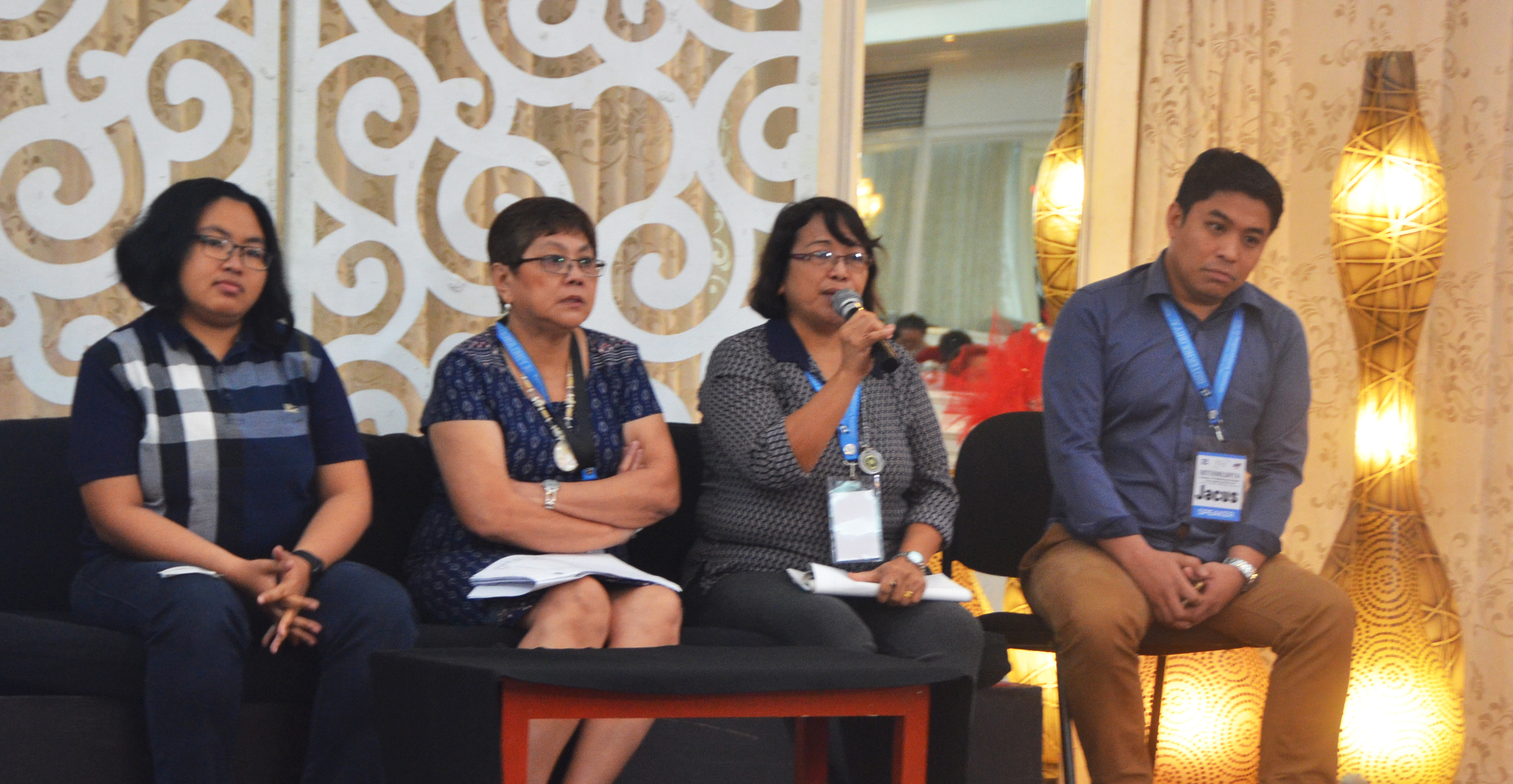
Speakers of the NBW Health Forum

The Forum discussed the developments in human immunodeficiency virus (HIV), drug discovery and development, genomics, and nutrition.

Speakers were Dr. Edsel Maurice Salvana, University of the Philippines Manila Institute of Molecular Biology and Biotechnology Director, Ms. Iris Bea Ramiro, University of the Philippines Diliman Marine Science Institute Research Associate, Ms. Mildred Udarbe, FNRI Lifestage and Nutrition Section Senior Science Research Specialist, Ms. Marietta Rodriguez, FNRI Nutritional Genomics Section Senior Science Research Specialist, and Mr. Jacus Nacis, FNRI Nutritional Genomics Section Science Research Specialist II.

Dr. Jaime Montoya, PCHRD Executive Director, emphasized that Biotechnology is helping the country by harnessing nature’s own toolbox and using people’s own genetic makeup to heal and guide research.

“To prepare for and meet the society’s most pressing challenges, the recent advances in biotechnology has never been more relevant. Thus, it is imperative that we continue exploring ways to keep pace with the greater demand for biotechnology,” Dr. Montoya added.

With the overall theme “Bioteknolohiya: Kaagapay ng Mamamayan sa Kaunlaran, Yakapin ang pagbabago, Biotek na tayo!,” NBW highlighted the use of modern biotechnology as one of several means to achieve and sustain food security, equitable access to health services, and sustainable and safe environment. n

Latest News
29 November 2016
Hits: 3175

DOST holds 2nd Balik Scientist Program (BSP) Convention, tackles agriculture, industry, and health researches

  • Print
  • Email

PASAY CITY, METRO MANILA- Filipino research efforts received another major boost as the three councils of the Department of Science and Technology (DOST) conducted the 2nd Balik Scientist Program (BSP) Convention on 18 November 2016 at Hotel Jen Manila.
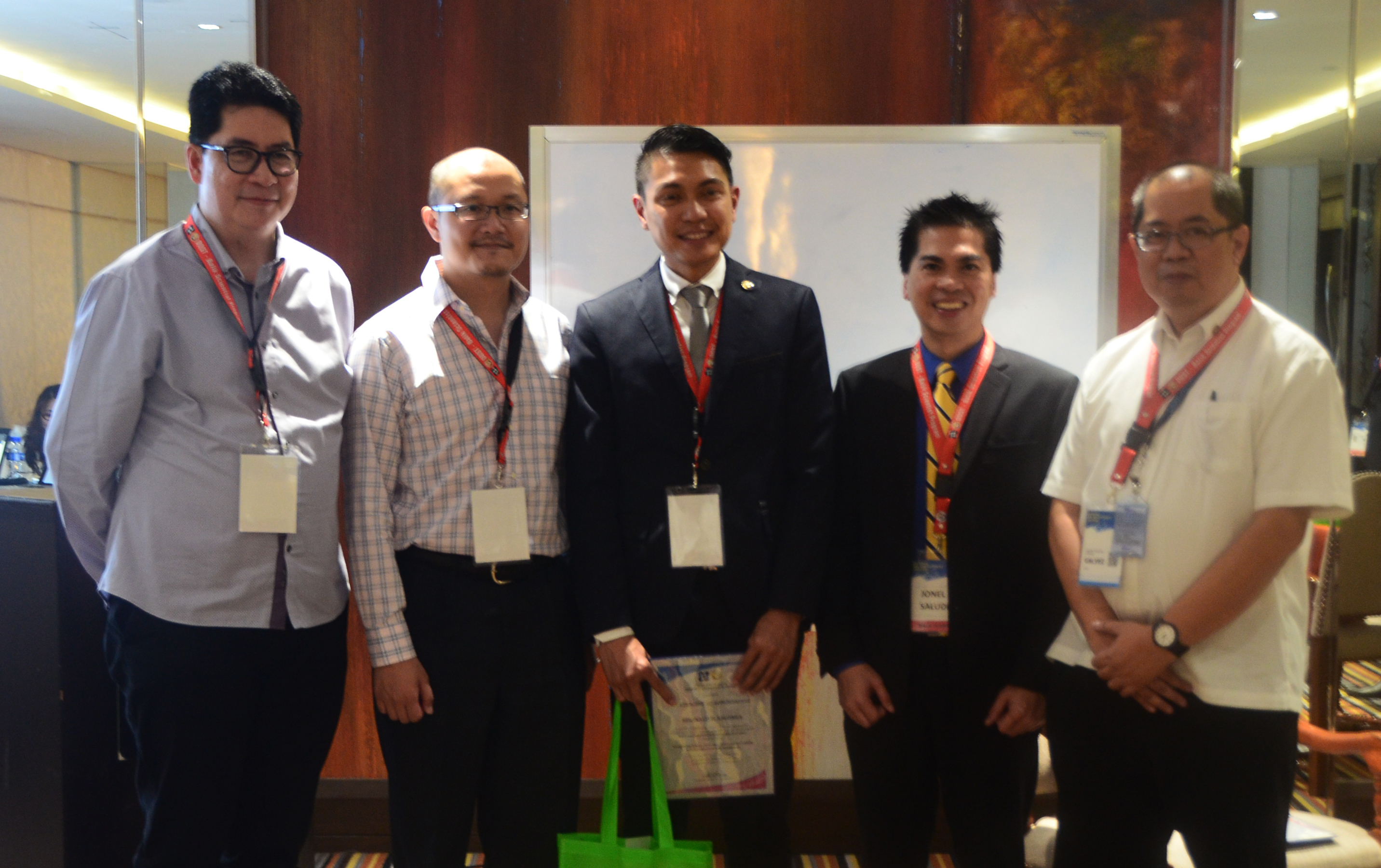

Dr. Jaime Montoya with speakers and moderator of the "Health Sciences" parallel session.

With the theme “Strengthening Science, Technology, and Innovation Capacity for Sustainable Countryside Development,” the Convention aims to provide updates on the recent technologies or researches in the areas of health, agriculture, aquatic, industry, and energy, as well as engage new stakeholders and potential institutions in the availment, development, and improvement of the program. 

Three parallel sessions on “Agriculture, Aquatic, and Natural Resources,” “Health Sciences,” and “Industry, Energy, and Emerging Technology” were held.

Following were the topics discussed:

  • Aquatic Health Management: Challenges for Aquaculture in the Asia-Pacific Region
  • Hybrids and Chimeras: Strain Improvement in Commercially Valuable Seaweeds
  • Exploring Philippine Biodiversity for Anti-senescent Interventions
  • The Efficacy of Medicinal Plants on Allergic Contact Dermatitis using Trinotrocholorobenzene (TNCB)-induced Contact Hypersensitivity (CHS) Mouse Model
  • Current Trends in Plasma Science and Technology Research
  • Developing a Feature-based Approach for Estimating Damage to Urban Areas Based on Analyzing Building Models in Virtual City

Speakers included Dr. Eduardo Leaño of Aquatic Animal Health Programme Network of Aquaculture Centres in Asia-Pacific, Dr. Michael Velarde of Buck Institute for Research Aging, Dr. Hernando Salapare of Université de Nice Sophia Antipolis, Dr. Michael Roleda of BioForsk-Norwegian Institute of Agricultural and Environmental Research, Dr. Reginald Salonga of Mejio University, and Dr. Pher Errol Quinay of Niigata University.

DOST Secretary Fortunato de la Peña emphasized the importance of Balik Scientist Program in the country reiterating that it is one of the solutions to brain drain. “I would like to see the local government undertaking their own S&T programs. The BSP can help,” he added.

The 2nd Convention was headed by the Philippine Council for Agriculture, Aquatic, and Natural Resources Research and Development (PCAARRD), with the Philippine Council for Health Research and Development (PCHRD), the Philippine Council for Industry, Energy and Emerging Technology Research and Development (PCIEERD) and the Department of Science and Technology (DOST) Office of the Undersecretary for Research and Development. n

Latest News
16 November 2016
Hits: 3637

Central Visayas Consortium holds health research conference; emphasizes importance of communication in health research

  • Print
  • Email

TALAMBAN, CEBU CITY- As part of the 2016 Central Visayas Health Research and Innovation Conference, communicators including writers, journalists, communication professors, videographers, and bloggers from Cebu met for the first time in a meeting of health research communicators last Thursday at University of San Carlos Talamban Campus.
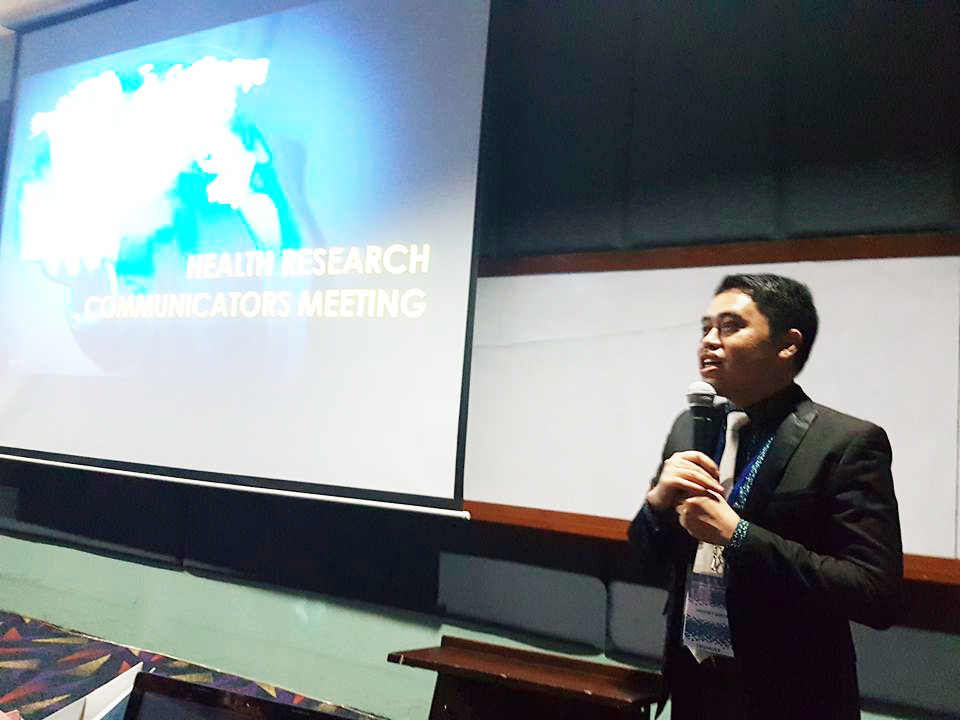

The meeting aims to gather communicators from the region to form SHARE, an initiative of the Philippine National Health Research System (PNHRS) to reach more stakeholders.

SHARE is a community of health research communicators who believes in the power of communication to share health research stories, advocacies, local and national initiatives. The community will support PNHRS and the Philippine Council for Health Research and Development (PCHRD) in communicating and translating research to benefit health research stakeholders.

During the meeting, Dr. Laurence Garcia, Central Visayas Consortium for Health Research and Development (CVCHRD) Chair, also presented the plan of the region in establishing their network of health research communicators.

Among their planned initiatives are the use of broadcast media and quad media to enable interactive information-sharing, Youtube to communicate challenging health researches, and capacity-building workshops to capacitate members.

“The community of health research communicators [SHARE] will help improve the dissemination of health research results in the country,” Dr. Garcia emphasized.

For communicators who are interested to join SHARE, you may contact Ms. Ladylove Baurile at This email address is being protected from spambots. You need JavaScript enabled to view it. or 837-0031. You can also visit www.healthresearch.ph for more information. ■

Latest News
18 November 2016
Hits: 5475

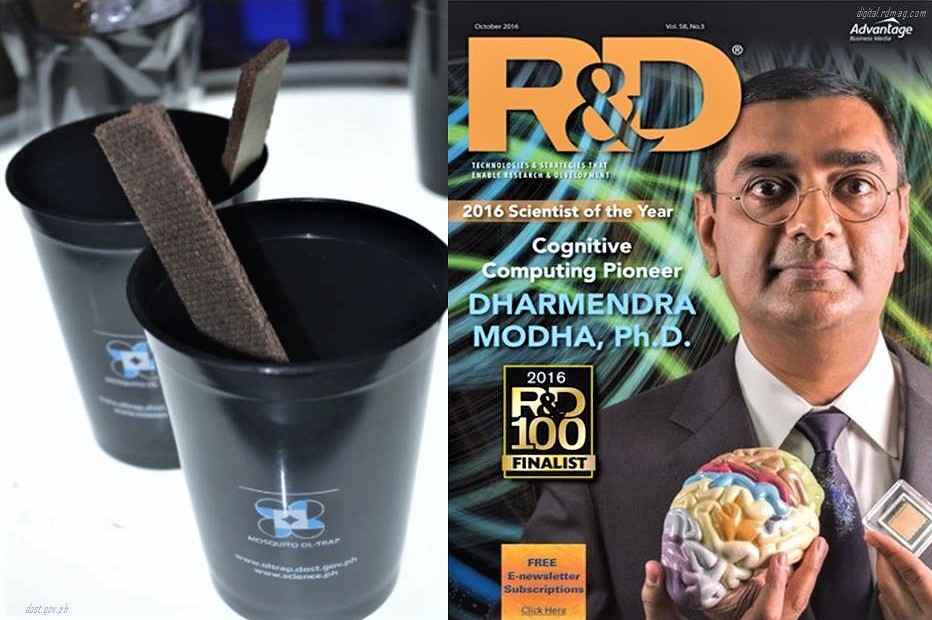
OL Trap tech among R&D 100 Awards finalists

  • Print
  • Email
The Ovicidal/Larvicidal (OL) Trap System, a local technology that targets the control of the dengue-causing Aedes aegypti population, was chosen as one of the R&D 100 Awards finalists by the R&D Magazine in their October 2016 Special Issue.


The R&D 100 Awards honors leading companies, technologies, and products that are considered game changers in their respective fields. In this year’s list, R&D Magazine chose to honor 100 technologies that are deemed to have great contributions to S&T development. In her editorial article, Bea Riemschneider, R&D Magazine Editorial Director, said that the list features top innovations that have created “lasting impact” to the industries.

The OL Trap technology makes use of simple and readily-available materials – black tumbler, lawanit strip, and larvicide pellets made up of black pepper (Piper nigrum L.) extracts, that attracts female Aedes aegypti to lay eggs on the strip soaked in larvicide solution. The solution, when absorbed by the lawanit strip, eventually kills the egg and larvae preventing the mosquito to reach its adult stage.

OL Trap kits are already commercially-available and may be purchased in selected supermarkets nationwide.
Latest News
09 November 2016
Hits: 3642

Siquijadnons opt for herbal home cures vs. modern medicine

  • Print
  • Email
Residents of communities surrounding Mt. Bandilaan, the highest peak in Siquijor island, prefer self-medications and folk healers than a visit to the doctor when seeking medical cure.

In a study led by Dr. Josel B. Mansueto, Dean, College of Arts and Sciences, Siquijor State University, doctors and hospitals are considered the last treatment option for the residents of barangays San Antonio, Cantabon, Cangmatnog, and Ibabao in Siquijor. Mt. Bandilaan, being a protected nature reserve, is home to several plants species that locals often use to treat several illnesses. In a Focus Group Discussion (FGD) conducted with the community residents, it was found out that these Siquijadnons resort to self-medication and folk healing through herbal medicines because such methods are readily available and more affordable for most of them. Also, the use of these herbal plants as cures had already been proven and passed on from generations to generations. This has contributed to the respondents’ high regard for traditional medicine.

While they do not discredit the curative effects of modern medicine in treating the sick, respondents consider this as the last curative resort. In cases where the use of modern medicine cannot provide a cure for their illness, the community residents still return to herbal medication, study says.

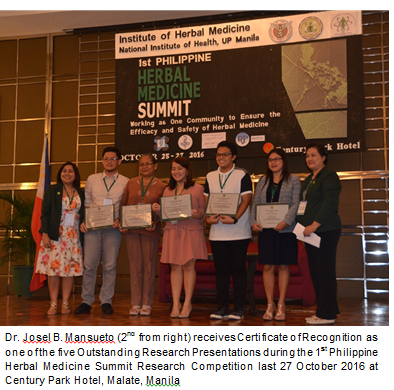
The study, “Folk Healing Practices of Siquijor Island: Documentation of Philippine Traditional Knowledge and Practices on Health and Development of Traditional Knowledge Digital Library on Health” was awarded as one of the five Outstanding Research Presentations during the 1st Philippine Herbal Medicine Summit Research Competition at the Century Park Hotel, Manila last 27 October 2016.
  1. 1st PH Herbal Medicine Summit pushes for more affordable, accessible herbal meds
  2. Call for Nominations: Alberto G. Romualdez, Jr. Outstanding Health Research Award (AROHRA)
  3. Call for Nominations: Best Mentor in Health Research Award
  4. e-Asia Project Implementation workshop tackles influenza and TB in Asia

Page 18 of 59

  • Start
  • «
  • 13
  • 14
  • 15
  • 16
  • 17
  • 18
  • 19
  • 20
  • 21
  • 22
  • »
  • End

fb tw


feedback
PLEASE RATE YOUR EXPERIENCE IN USING THIS WEBSITE

Your rating

no rate selected


email is required

email is invalid

affiliation is required

affiliation is required

PCHRD LOGO small
Republic of the Philippines
Department of Science and Technology
Philippine Council for Health Research and Development
 
2/f Titanium Building, DOST MIRDC Compound
Gen. Santos Ave., Bicutan, Taguig City, 1631, Philippines
  • NUHRA
  • REGIONS
  • OPPORTUNITIES
  • News
  • About PNHRS
    • Organizational Chart
    • PNHRS
    • Objectives
    • Vision I Mission I Core Values
    • Strategy Map
    • History
    • Implementing agencies
    • Downloads
    • Gallery
    • TWC Update
    • About PNHRS Law